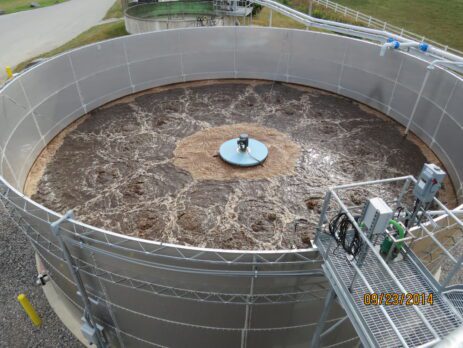
Achieving Low Phosphorus Limits with AquaSBR and AquaDisk Filters
Meeting NPDES and Chesapeake Bay ENR Standards
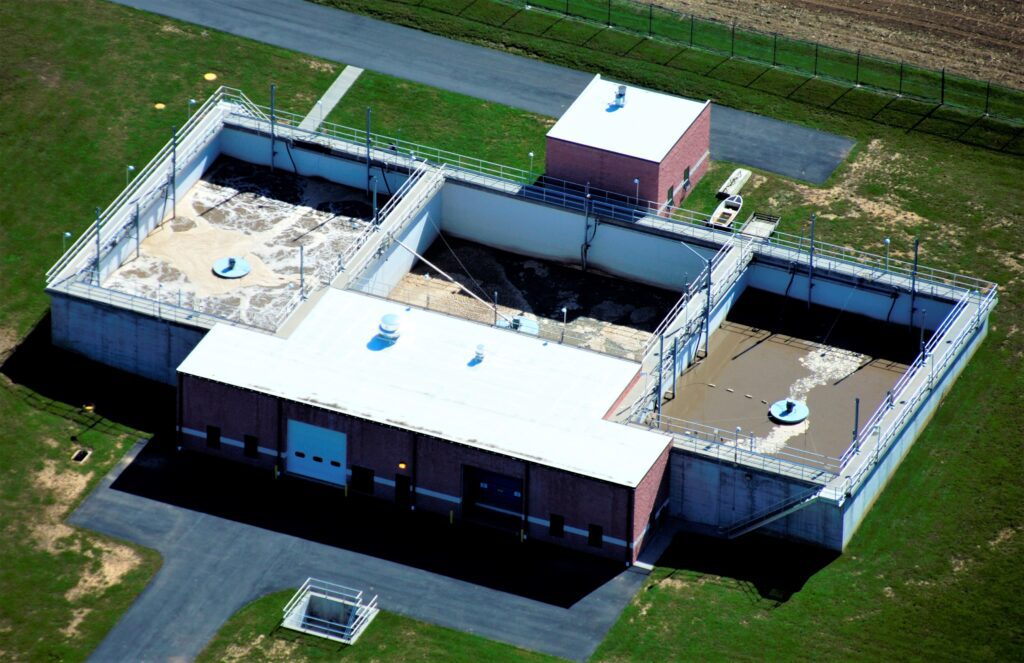
The current regulatory landscape demands more rigorous phosphorus removal standards, presenting an ongoing challenge for wastewater treatment plants. Each state’s Department of Environmental Protection outlines these standards in the NPDES permit it issues. The permit specifies the pollutants a facility must remove. Achieving high-level phosphorus removal, crucial for plants operating under Biological Nutrient Removal (BNR) limits, often necessitates levels below 0.8 mg/l. Facilities within the Chesapeake Bay Watershed face even stricter requirements, mandating Enhanced Nutrient Removal (ENR) and phosphorus levels below 0.3 mg/l. Installing an AquaSBR system offers a promising solution to meet these standards effectively.
The Benefits of a “True-Batch” SBR for Nutrient Removal
The AquaSBR sequencing batch reactor is a variation of the activated sludge process where all phases of treatment are accomplished within a single reactor. It is a “true-batch” system that is proven to be an efficient, reliable means of wastewater treatment capable of producing high-quality effluent with low levels of BOD, TSS, Turbidity, Total Nitrogen, and Total Phosphorus. The advantages include:
- No influent during settle or decant phases.
- Elimination of short-circuiting.
- Consistent, high-quality effluent.
Tertiary Filtration: Reaching Phosphorus Levels Below 0.3 mg/l
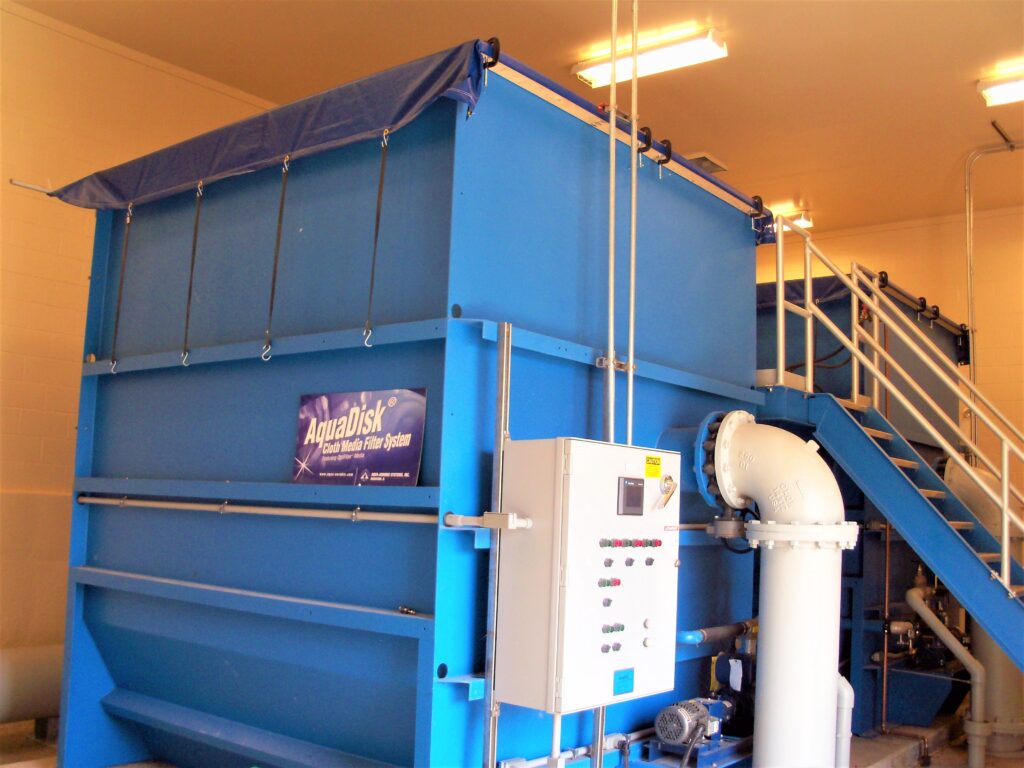
To attain reduced phosphorus levels, tertiary filtration becomes essential. The AquaSBR, coupled with an AquaDisk cloth media filter, is an effective combination for achieving these lower levels.
How the AquaDisk® Reaches < 0.3 mg/l Phosphorus
The AquaDisk filter utilizes a unique directional flow and specialized media to capture fine particulates that secondary clarifiers might miss:
- Vertical Disk Design: Centrally located disks covered in pile cloth media allow clarified effluent to pass through while trapping phosphorus-rich solids on the surface.
- Chemical Enhancement: By adding aluminum or iron-based coagulants (like Alum or Ferric Chloride) ahead of the filter, you can chemically bind soluble phosphorus into flocs that the cloth media easily removes.
- True-Batch Integration: When paired with the AquaSBR, the filter receives a consistent, high-quality feed, ensuring the lowest possible effluent concentrations for Total Phosphorus (TP), BOD, and TSS.
Key Operational Advantages
Beyond meeting regulatory limits, the AquaDisk system is designed for long-term facility efficiency:
- Low Backwash Volume: The system requires significantly less backwash water than traditional sand filters, reducing your overall treatment costs and energy footprint.
- Small Footprint: The vertical disk orientation allows for high filtration capacity in a fraction of the space required by horizontal beds.
- Retrofit Ready: For existing plants struggling to meet new permit limits, the AquaDisk can be easily installed into an existing treatment scheme as a final polishing step.
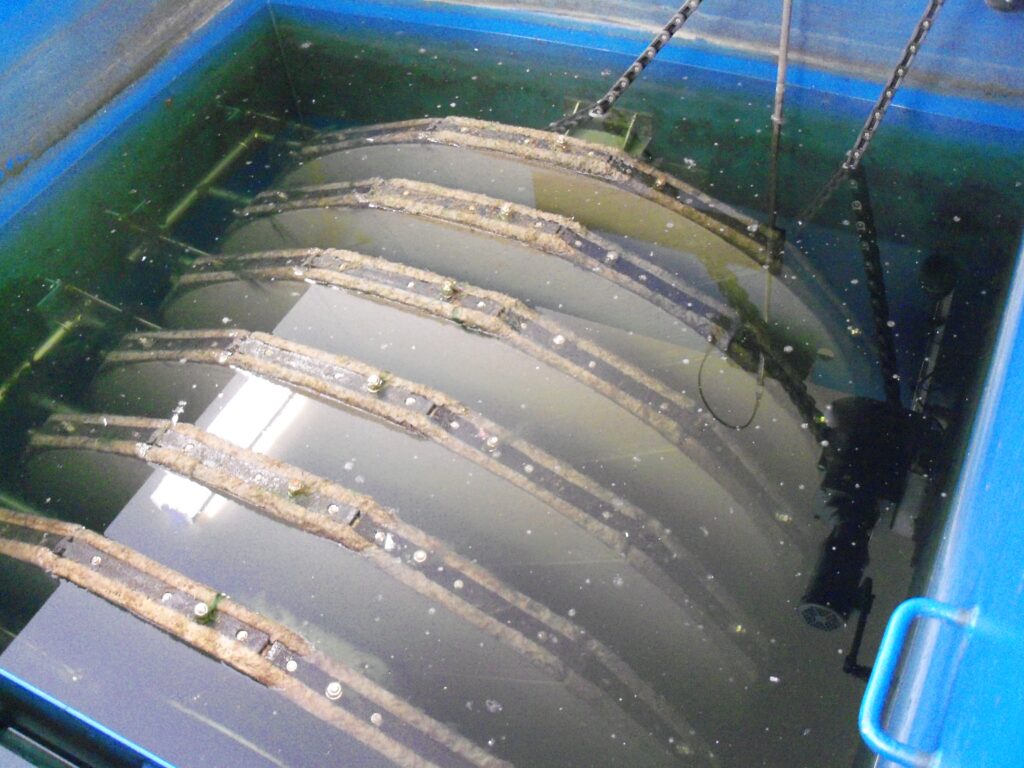
Existing plants that operate secondary treatment processes and cannot meet the low-phosphorus levels required by their NPDES permit can install an AquaDisk filter into their existing treatment scheme.
Expert Support for Your Facility
Navigating NPDES requirements in Pennsylvania, Maryland, and the surrounding Mid-Atlantic states requires an engineering-first approach. Since 1969, Aqua-Aerobic Systems has led the industry in nutrient removal research.
Need help reviewing your specific application?
The team at Envirep is available to help you size equipment or review your current discharge limits.
Service Area: PA, NJ, MD, DE, and DC
Phone: 717-761-7884
Email: sales@envirep.com
By Michael Gillespie, President at Envirep/TLC